


For non-emergencies use our contact form
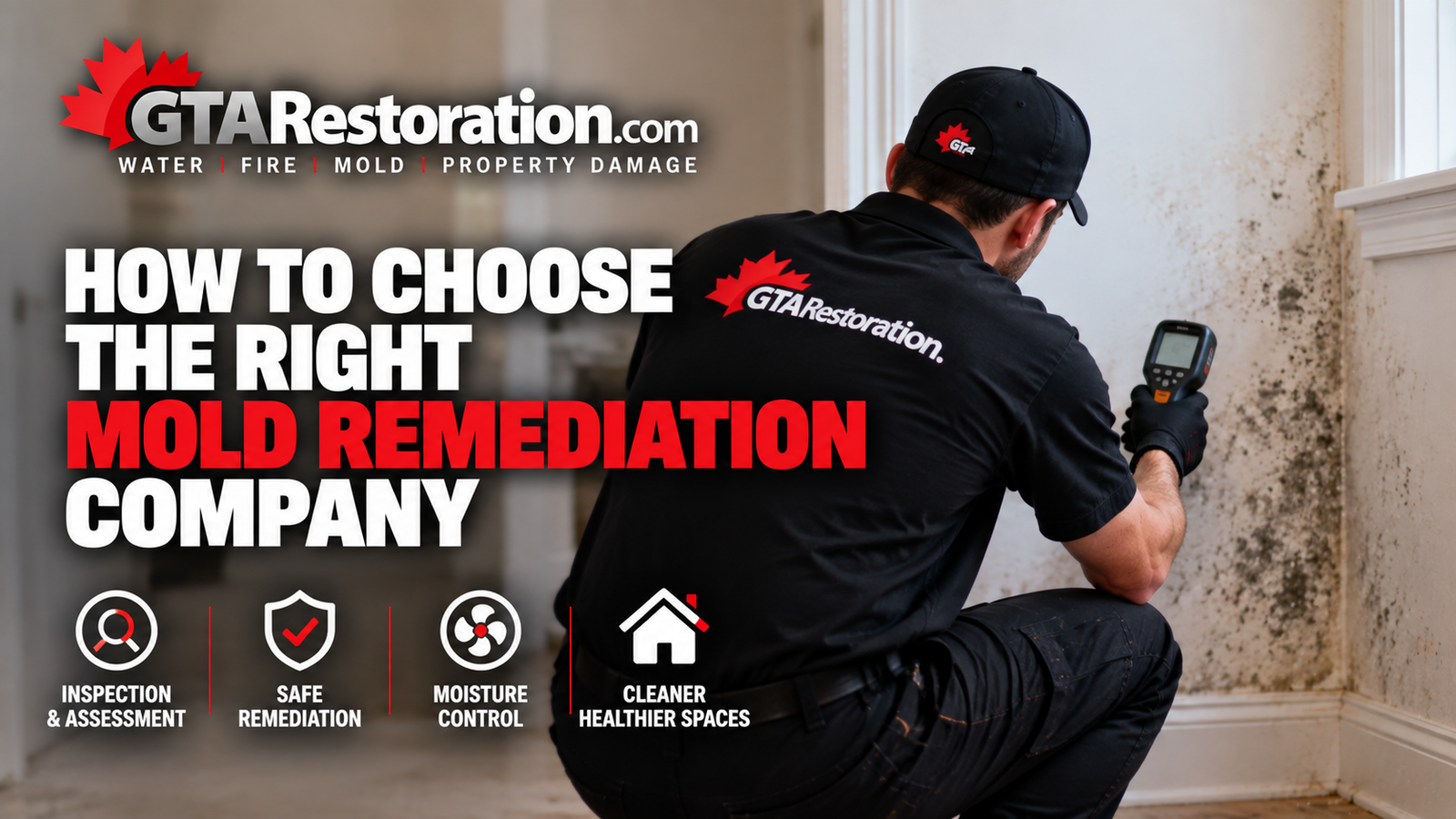
Mold Remediation Company | How to Choose the Right One
Choosing the right mold remediation company matters because successful remediation involves more than cleaning visible spots. A qualified contractor should identify the moisture problem, assess affected materials, control the work area and explain what needs to be removed, cleaned or dried.
Before hiring anyone, ask about training, insurance, inspection procedures and the planned scope of work. In addition, make sure the company explains how it will correct or address the moisture source. Without moisture control, mold can return after cleanup.
Choose a Mold Remediation Company With Proper Training
Start by asking about restoration and mold-remediation training. Health Canada identifies IICRC certification or equivalent training and experience as one sign of a qualified professional.
The ANSI/IICRC S520 Standard for Professional Mold Remediation covers remediator qualifications, safety, inspection, documentation, structural remediation and other professional practices.
Training does not replace experience, so also ask how frequently the contractor handles projects similar to yours.
Check Insurance Before Hiring a Mold Removal Company
A professional contractor should carry appropriate business insurance. More importantly, Health Canada recommends checking that liability insurance specifically covers mold-remediation work when mold removal is involved.
Ask for proof of insurance before approving the project. For commercial or condominium work, additional insurance documents may also be required by the building or property manager.
Ask for a Written Mold Remediation Plan
A reliable mold remediation company should explain what it intends to do before major work begins. A written scope can help prevent confusion about the affected areas, removal procedures and project costs.
The plan may include:
- Areas included in the remediation
- Known or suspected moisture sources
- Containment procedures
- Materials planned for removal
- Cleaning methods
- HEPA vacuuming where appropriate
- Drying requirements
- Waste handling
- Personal protective equipment
- Post-remediation inspection or verification
Ask questions if any part of the scope is unclear before work starts.
What a Professional Mold Remediation Company Should Do
Find the Moisture Source Before Mold Cleanup
Mold growth usually points to an underlying moisture problem. For example, a leaking pipe, foundation seepage, roof leak, flooding or high humidity may keep materials damp.
Therefore, cleanup should not focus only on visible mold. The contractor should also investigate why the area became wet and explain what must change to prevent recurring growth.
If the water source is unclear, water leak detection and moisture readings can help identify damp areas.
Inspect the Size and Location of the Mold Problem
The remediation approach depends partly on the amount and location of growth. Health Canada classifies a single mold area larger than three square metres as extensive and recommends professional assessment and cleanup. :chatgpt-content-reference{index=”2″}
Professional help is also recommended when mold keeps returning, sewage or other contaminated water caused the damage, hidden mold is suspected, or flooding has entered wall, ceiling or floor cavities. :chatgpt-content-reference{index=”3″}
Use Containment During Professional Mold Remediation
Depending on the project, contractors may isolate the work area to help reduce the movement of dust and mold particles into unaffected rooms.
The amount of containment should match the conditions and scope of work. Larger projects may require more control than a small localized area.
Remove Mold-Damaged Materials When Necessary
Some materials can be cleaned. However, porous materials with significant mold growth or water damage may need removal.
Health Canada notes that a qualified company should prioritize proper removal of damaged mold-growth materials rather than relying only on sealants or chemical treatments. :chatgpt-content-reference{index=”4″}
A contractor should explain which materials can remain and why others need to be removed.
Use HEPA Cleaning and Appropriate Equipment
HEPA-filtered equipment can help capture fine particles during cleaning. Depending on the project, remediation may also involve air filtration, controlled demolition, moisture meters and drying equipment.
However, equipment alone does not make a project successful. Proper procedures, source control and careful cleaning remain essential.
Dry the Area Before Repairs Begin
New drywall, flooring or finishes should not cover a continuing moisture problem. Therefore, affected areas should reach appropriate drying conditions before reconstruction begins.
For water-related mold problems, our water damage restoration service can also address extraction and structural drying.
Choose the Right Mold Remediation Company
Ultimately, the right mold remediation company should provide clear information, appropriate training, proper insurance and a practical plan for both mold and moisture.
Look for a contractor that explains the work rather than relying on fear-based sales claims. A professional mold remediation company should be able to describe what will be removed, what can be cleaned, how the work area will be controlled and how recurring moisture will be addressed.
GTA Restoration provides mold removal and remediation services for residential and commercial properties throughout Toronto and the GTA.
Need a Professional Mold Remediation Company?
GTA Restoration provides mold inspection, moisture assessment, containment, remediation and water damage restoration throughout Toronto and the GTA.
Visible mold or recurring musty odours? Find and correct the moisture source before the problem becomes larger.
Learn More
Why a Certified Mold Remediation Technician is Important | Toronto Mold Removal | Best Questions for a Restoration Contractor | What Does a Water Damage Restoration Company Do? | What Is a Water Damage Restoration Technician? Why you Should Trust the Experts for Mold Remediation in Toronto 









You must be logged in to post a comment.